
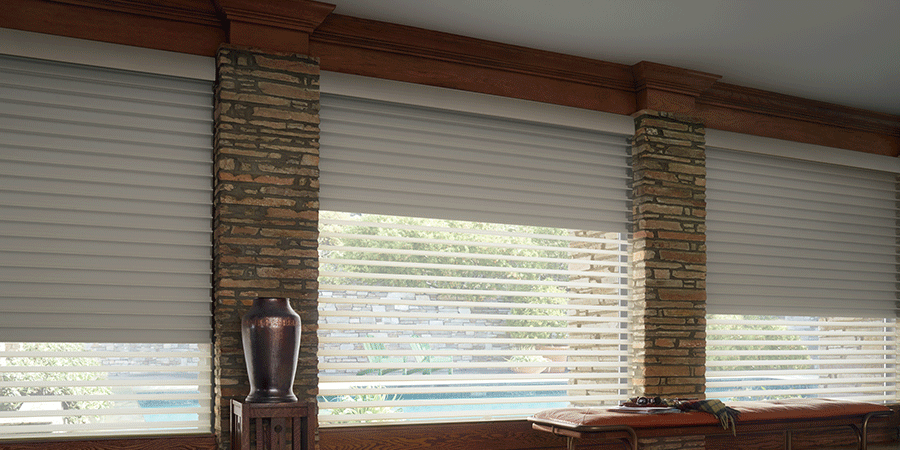
Room-darkening and blackout window treatments are often discussed as though they are the same thing, but they provide different levels of light control. Understanding that difference can help you choose the right window treatments for your bedroom, bathroom, living room, media room and other spaces throughout your home.
Some rooms only need softer light, greater privacy or relief from glare. Others need the darkest environment possible. Let’s compare room-darkening and blackout shades, explain how installation affects their performance and explore where each option works best.
Room Darkening vs. Blackout: What Is the Difference?
The biggest difference between room-darkening and blackout window treatments is how much light they block.
Room-darkening shades use fabrics designed to block a majority of incoming light. They can make a room feel significantly darker and more comfortable, but some light may still enter around the edges of the shade. For many homeowners, this provides enough darkness for sleeping, watching television or reducing glare without creating a completely dark space.
Blackout shades use opaque fabrics that prevent light from passing through the material. However, blackout fabric alone does not always create a fully dark room. Small gaps between the shade and the window frame may still allow light to enter along the sides, top or bottom.
For the darkest possible result, the fabric, operating system, window measurements and installation method all need to work together. Systems such as Duette® Honeycomb Shades with LightLock™ use specially designed side channels to reduce the light that commonly enters around the edges.
| Feature | Room-Darkening Shades | Blackout Shades |
|---|---|---|
| Light control | Blocks most incoming light | Uses opaque fabric to block light through the shade |
| Possible light gaps | Some light may enter around the edges | Edge light may remain unless side channels or layering are used |
| Best for | Guest rooms, living rooms, bathrooms and everyday privacy | Bedrooms, nurseries, media rooms and daytime sleepers |
| Daytime flexibility | Available in many adjustable and light-filtering designs | Often paired with a second shade or drapery for flexible daytime light |
Explore our room-darkening window treatment solutions to compare fabrics, products and operating features in more detail.
Room-Darkening Shades for Comfortable Bedrooms
With all of the information and different products available, it may not seem obvious what the best window treatments are for bedrooms. The right choice depends on how sensitive you are to light, the direction your bedroom windows face and how much outdoor light reaches the room at night.
Room-darkening shades block a majority of incoming light while improving privacy and creating a cozier atmosphere. A small amount of light may still peek through around the edges, depending on the window, shade style and installation. For many people, this creates a dark enough oasis to get plenty of sleep.
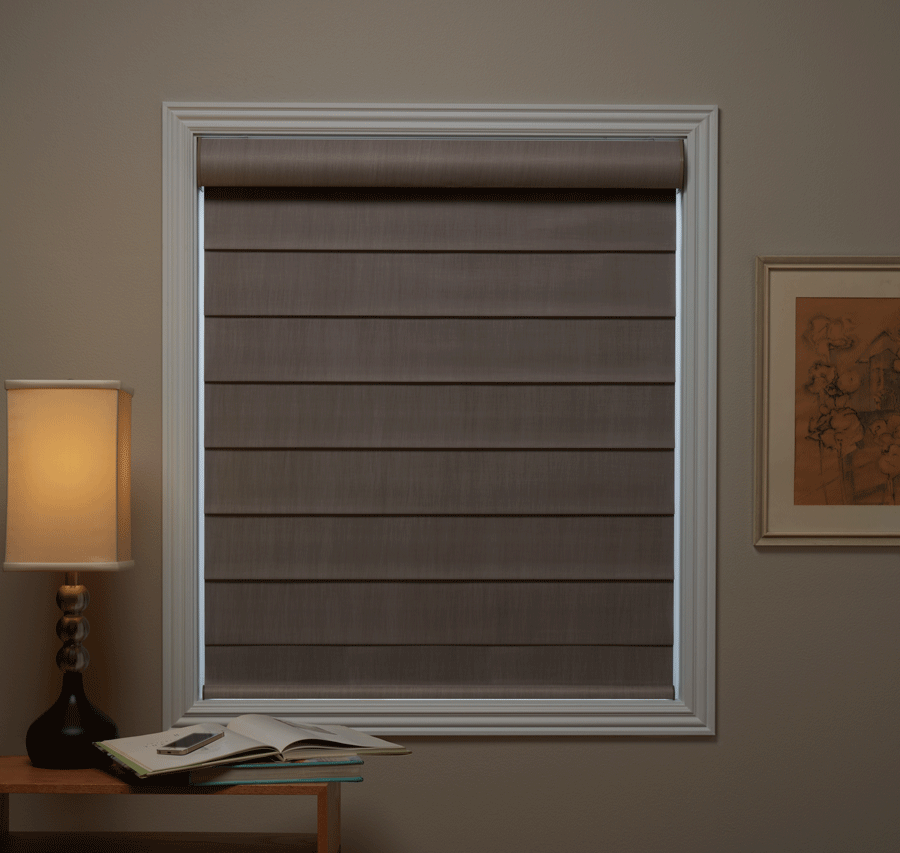
Room-darkening shades may be the right fit when you want to reduce early morning sunlight, block streetlights or enjoy greater privacy without making the room completely dark. They are also a practical choice for guest bedrooms where different visitors may prefer different levels of light.
For homeowners who are especially sensitive to light, have east-facing bedroom windows or need to sleep during the day, a blackout system may provide better results. Our guide to blackout window treatments for better sleep explores bedroom products and features in more detail.
Blackout Shades for the Darkest Bedrooms
There are times when even a little sliver of light is too much. That’s where blackout shades come in. Their opaque fabrics stop light from passing through the shade, making them a popular choice for primary bedrooms, nurseries, children’s rooms and spaces used by shift workers.
Duette® Honeycomb Shades with LightLock™ are one of the strongest options for homeowners who want an exceptionally dark bedroom. The LightLock™ system uses U-shaped side channels designed to absorb or redirect light that would otherwise enter along the edges of the shade.
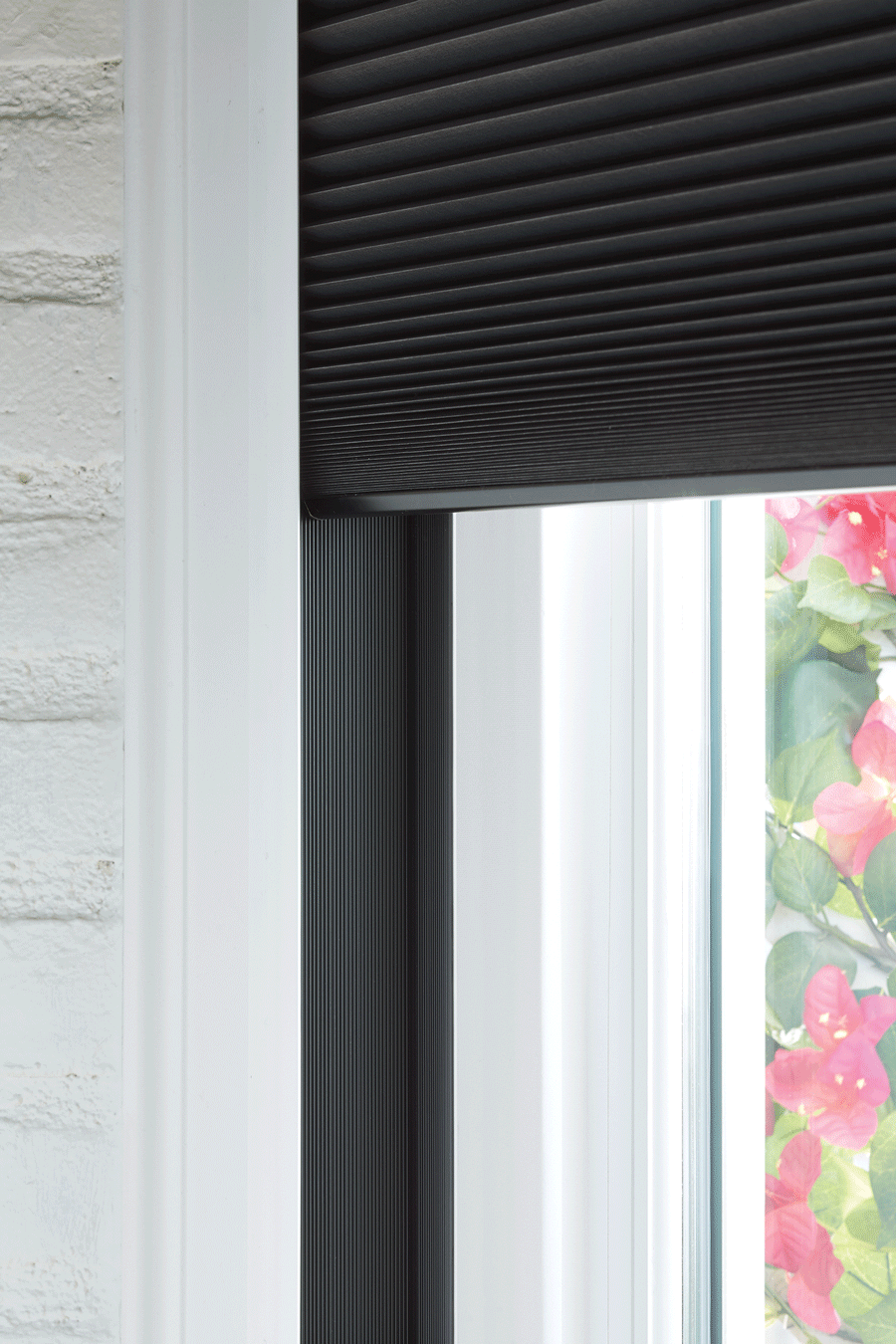
Because every window is different, accurate measuring and professional installation are important. The closer the shade and side channels fit the window opening, the more effectively the system can reduce unwanted light.
Learn more about Duette® Honeycomb Shades, including room-darkening fabrics, insulating cell construction and available operating systems.
Does Blackout Fabric Make a Room Completely Dark?
Not always. “Blackout” typically describes the opacity of the fabric, meaning light cannot pass directly through the material. It does not automatically mean that every trace of light will disappear from the room.
Light can still enter through gaps around the window treatment. The amount depends on:
- The shade style and operating system
- Whether the shade is mounted inside or outside the window frame
- The depth and shape of the window opening
- How closely the finished shade fits the window
- Whether side channels, a secondary shade or drapery are added
An outside-mounted shade can extend beyond the window opening and cover more of the surrounding area. Inside-mounted shades offer a streamlined appearance but may leave small gaps necessary for the shade to operate. Layering custom drapery over a blackout shade can help cover edge gaps while adding softness, insulation and a finished designer look.
Added Privacy and Light Control in Bathrooms
There are two factors high on most people’s priority lists when it comes to bathroom windows: light control and privacy. This is definitely not a room where you want to be waving to your neighbors.
Room-darkening shades can provide privacy while reducing bright morning or afternoon sunlight. In many bathrooms, complete blackout is not necessary. The goal is usually to prevent views into the room while still allowing enough natural light for the space to feel comfortable.
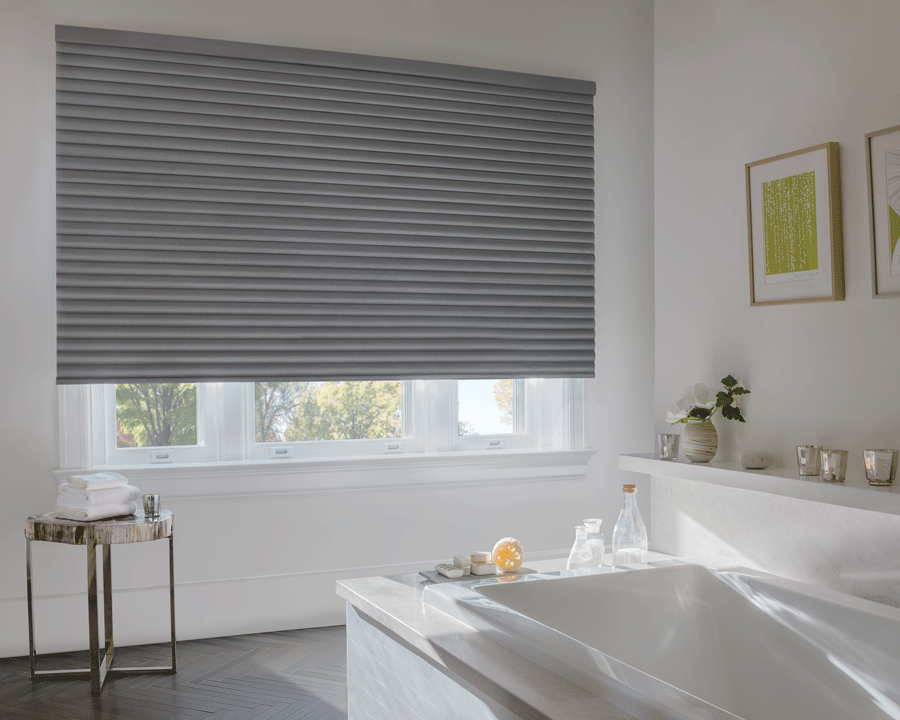
Custom shades also allow you to choose the installation style. An outside mount, like the one shown here, can cover more of the window opening and reduce gaps around the sides. Other bathrooms may benefit from top-down bottom-up shades, which allow daylight to enter above eye level while keeping the lower portion of the window covered for privacy.
Flexible Light Control for Living Rooms and Gathering Spaces
No matter what you call it—the great room, family room or living room—you probably spend a majority of your time there. That means the space may need several levels of light control throughout the day.
You might want soft natural light in the morning, glare reduction while watching television in the afternoon and greater privacy after dark. A permanent blackout environment would not be practical, but the ability to darken the room when necessary can be extremely useful.
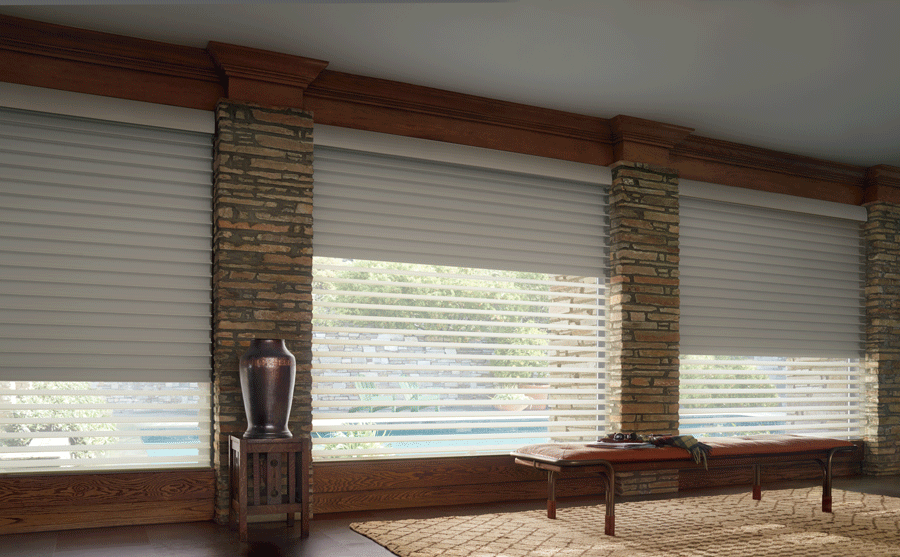
Dual shades offer two fabrics at one window. A light-filtering front shade can soften sunlight and preserve the atmosphere of the room, while a secondary room-darkening or blackout shade provides stronger light control when you need it. The two shades operate independently while sharing one streamlined headrail.
This combination is especially helpful in rooms where light conditions change throughout the day or where windows face different directions.
Blackout Shades for Media Rooms and Home Theaters
Having an at-home theater is such a fun feature. But what happens when you want to watch a movie at two in the afternoon on a sunny day? Sounds like you could benefit from blackout shades in this space.
Direct sunlight and small bands of light around a shade can create distracting reflections on a television or projection screen. Blackout fabrics reduce incoming light, while a system with side channels can provide stronger control around the perimeter of the window.
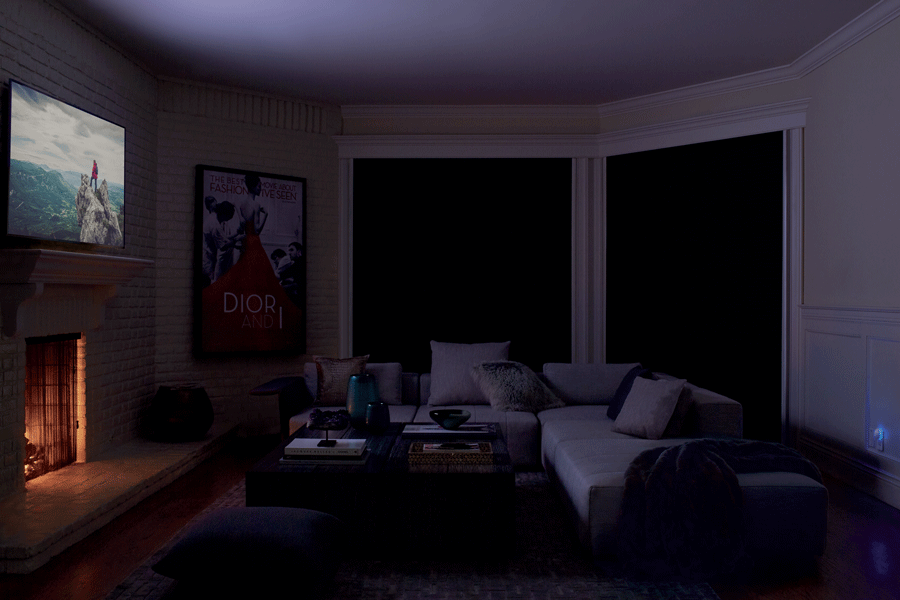
Duette® Shades with LightLock™ are an excellent choice for media rooms where darkness and glare control are priorities. Blackout roller shades paired with drapery can also create an effective layered solution.
Room Darkening or Blackout: Which One Should You Choose?
The right choice depends on the room, your sensitivity to light and how you want the window treatment to function during the day.
- Choose room darkening when you want substantial light reduction, privacy and a darker atmosphere but do not require complete darkness.
- Choose blackout fabrics when you need to prevent light from passing through the shade itself.
- Choose blackout shades with side channels when reducing edge light is especially important.
- Choose dual shades when you want both softly filtered daylight and stronger room darkening at the same window.
- Add custom drapery when you want to reduce side gaps, improve insulation and create a layered bedroom or media-room design.
You should also consider window direction. East-facing bedroom windows receive strong morning sunlight, while west-facing windows can introduce glare and heat later in the day. Read our guide to how window direction affects natural light to learn how the time of day can influence your window treatment needs.
Make Light Control More Convenient with Automation
Room-darkening and blackout shades are most effective when you remember to adjust them at the right time. With motorized window shades, you can schedule your treatments to close before bedtime, before afternoon glare reaches the room or whenever privacy becomes a priority.
In a bedroom, shades can close automatically as part of your evening routine and open in the morning when you are ready to wake. In a media room, you can lower the shades without leaving your seat. Automation is also helpful for large, tall or difficult-to-reach windows.
Let Us Help You Compare Room-Darkening and Blackout Shades
Whether you are looking for better sleep, greater privacy, less glare or stronger control over afternoon sunlight, room-darkening and blackout shades can make your home more comfortable.
At Aero Drapery & Blind, we will evaluate your windows, discuss how each room is used and help you decide how much light control you really need. Visit one of our Minnesota showrooms to see the fabrics and operating systems in person, or schedule your FREE in-home consultation for personalized recommendations.
