

Home design is all about finding elements that work together to show off your style while providing function. Custom window treatments are no different. Pairing shades with drapery can elevate your design while delivering incredible solutions for lighting, privacy, and comfort. When done correctly, layered window treatments offer both beauty and purpose.
Before diving into style, it’s important to remember one guiding principle:
Function Comes First
Every room in your home serves a different purpose. That means your windows will need different solutions depending on the space. The base shade is where you gain most of your functionality. This foundational layer provides light control, privacy, glare reduction, and energy efficiency. For example:
- Bedrooms may benefit from blackout shades.
- Living rooms often call for light-filtering and glare-reducing options.
- Dining spaces may need privacy without sacrificing natural light.
Once your base shade is selected, drapery becomes the finishing layer that enhances both style and additional coverage.
Now let’s explore three inspiring design approaches.
Textures + Patterns
Finding design elements that speak to you is a top priority. Textures and patterns are wonderful ways to express your personality. However, balance is key—too much pattern can make a space feel chaotic.

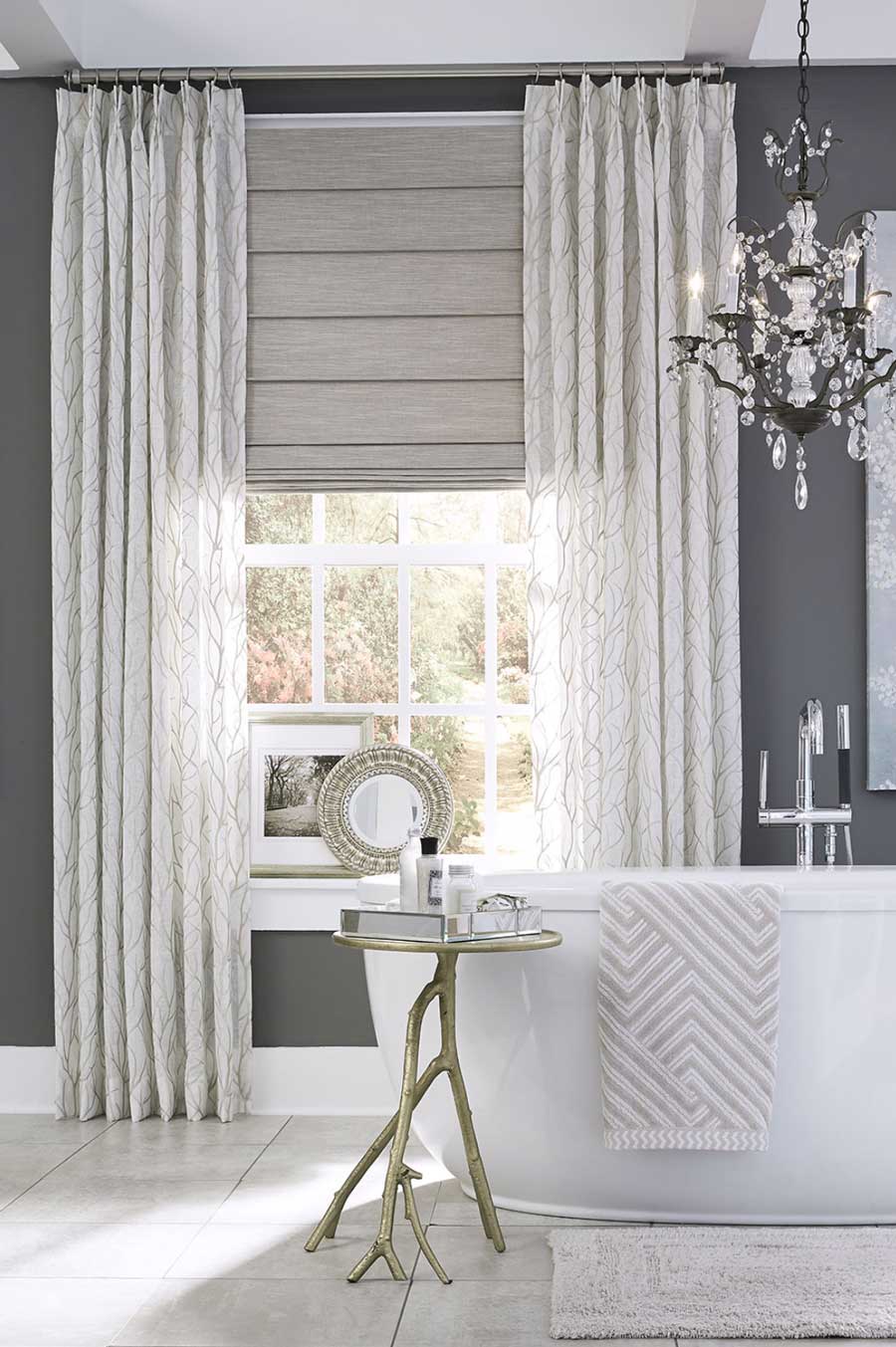
This space is a perfect example of how to incorporate pattern without overwhelming the room. The subtle all-over pattern on the draperies pairs beautifully with the structured, uniform lines of woven shades. The shades provide a soft glow of natural light, while the drapery panels frame the window effortlessly.

When layering textures, think about contrast in scale. If your base shade has texture (like woven woods), consider a softer pattern in the drapery. If your shade is smooth and minimal, your drapery can carry more visual weight.
Neutrals, Neutrals, Neutrals!
Have we mentioned how much we love neutrals? They’re timeless, versatile, and perfect for layering. Light neutrals can even help open up your space. Columns of drapery hung vertically can make ceilings appear higher. Installing the drapery rod 12–18 inches above the window enhances that illusion even further.

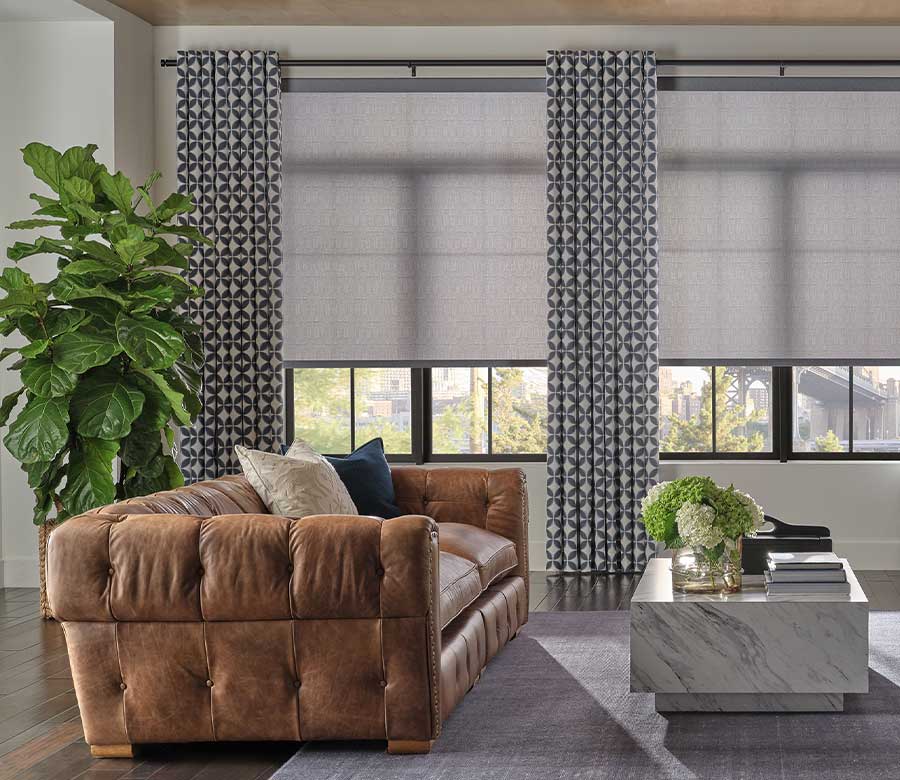
In this gorgeous space, natural tones blend effortlessly. The jacquard drapery fabric alongside sheer shadings feels luxurious yet approachable. Sheer shades allow you to enjoy natural lighting and privacy while protecting your home from glare and UV rays.

If you’re aiming for a casual look, consider cotton or linen fabrics. For a more formal feel, silks, velvets, and jacquard fabrics elevate the room instantly. Neutrals create cohesion, making layering look intentional and refined.
Go Bold with Contrast
While neutrals offer softness, contrast can make a dramatic statement. Pairing shades with drapery in contrasting colors or patterns draws attention to your windows and adds personality.

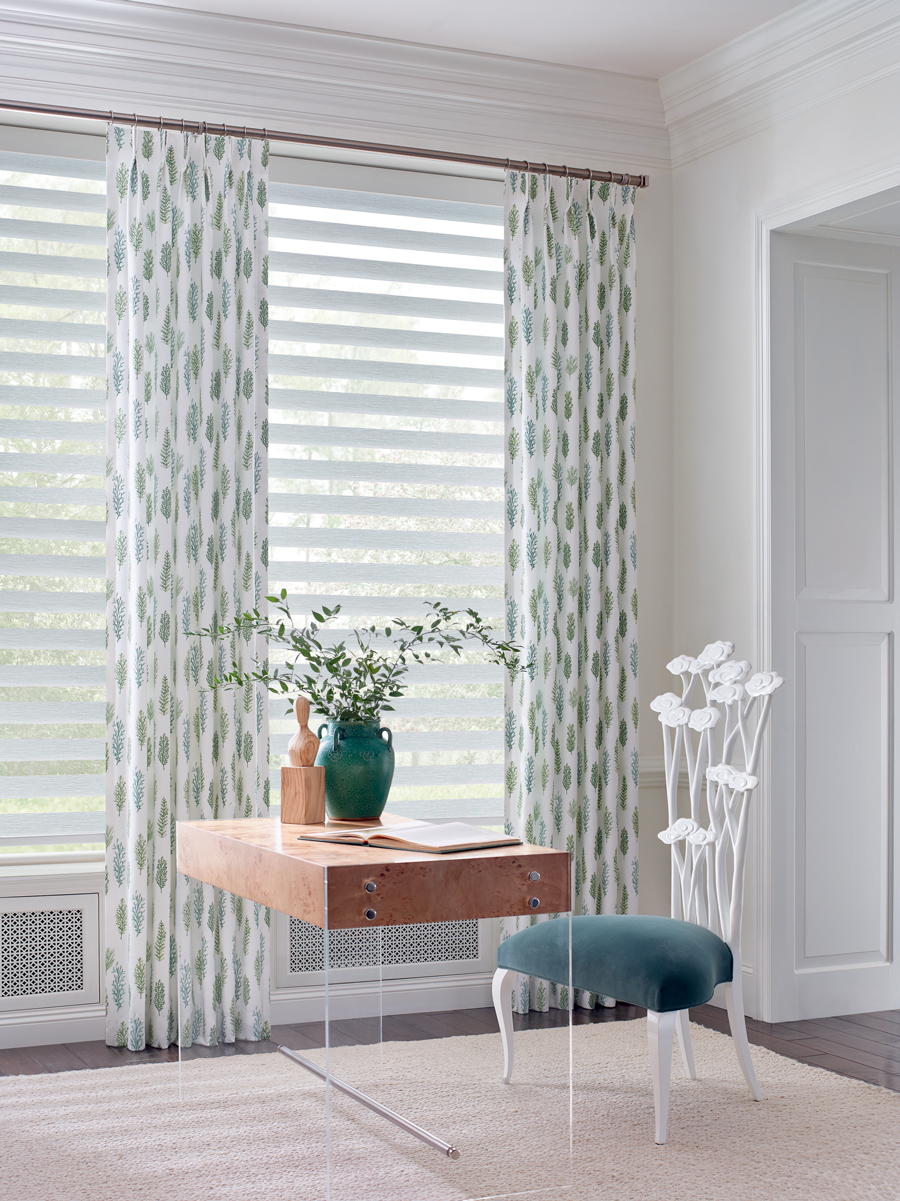
This home office is a stunning example. The kerfed windows (which allow for inside mounts) support a sleek, contemporary look. Traditionally cased windows can also feature inside mounts if depth allows. Shallow windows may require outside mounts, which can make layering slightly more complex—but that’s where professional design guidance makes all the difference.

When it comes to layered drapery trends, low-profile shades paired with carefully selected hardware ensure everything works seamlessly.
Choosing the Right Drapery Style
Once your base shade is selected, it’s time to determine how your drapery will function.
Stationary Side Panels
- Frame the window beautifully
- Add softness and texture
- May help conceal light gaps
- Primarily decorative
Full Functioning Drapery Panels
- Close at the center
- Add another layer of privacy
- Provide enhanced light control
- Increase insulation
Your lifestyle and room needs will determine which option is best.
Selecting the Perfect Fabric
Now comes the fun part—fabric selection. With countless options available, it helps to ask yourself a few questions.
- What atmosphere do I want in this room?
- Do I prefer solids or patterns?
- Am I drawn to bold colors or calming neutrals?
Fabric weight also affects function. Light-filtering materials create an airy feel, while lined or blackout fabrics offer added coverage and insulation.
The Finishing Touches: Hardware & Headers
Hardware plays an important design role.
- Make a statement with matte black or gold rods
- Match existing finishes for a subtle look
Header styles also influence the overall aesthetic.
- Rod Pocket: Traditional, used for more casual atmosphere
- Ripple Fold: Specialty track, uniform folds across the top
- Grommet: Clean, structured, and modern
- Pinch Pleat: Contemporary yet timeless, adaptable to formal or relaxed settings
These details elevate your layered look from simple to stunning.
Don’t Forget the Length
Drapery length completes the design.
Two popular options include:
- At the floor: Panel length meets the floor, barely touching
- Puddle: Fabric softly gathers on the floor for a more dramatic effect
Both styles can work beautifully depending on your space and design goals.

Our Experts Love Pairing Shades with Drapery
Creating a custom design that balances beauty and functionality is what we love most. Every home is unique, and layered window treatments allow you to tailor both style and performance to your needs. Whether you’re seeking light control, privacy, added insulation, or simply a refreshed look, our professionals are ready to help. Contact the team at Aero Drapery & Blind to schedule your free in-home consultation.
