
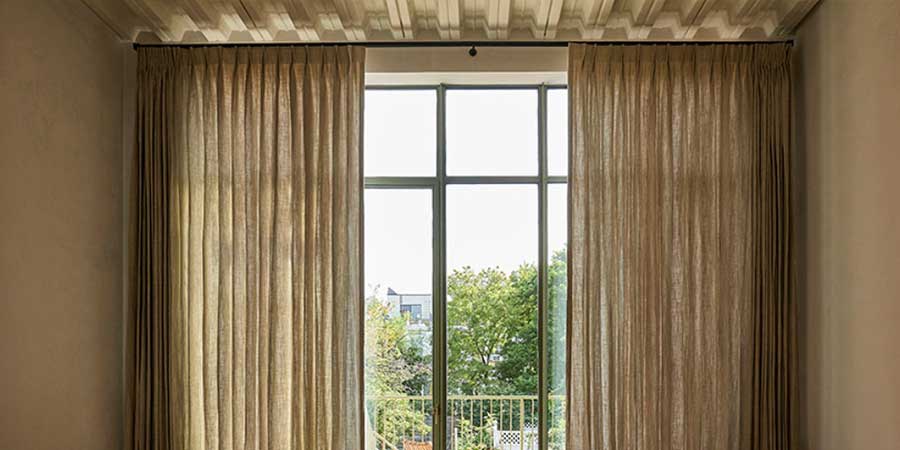
Custom drapery is more than a finishing touch. It’s a showstopper at the window, setting the tone for the entire room. Draperies add depth, softness, and personality, while also enhancing light control, privacy, and energy efficiency. Pinch pleat drapery delivers timeless elegance with tailored precision, making it a go-to choice for designers who love structure and style. Let’s dive into everything that makes it such a great header style for today’s drapery trends.
What is pinch pleat drapery?
It refers specifically to the header style. How the top of the drapery is crafted and finished. The name comes from fabric being pinched together and stitched into permanent pleats, typically 1–2 inches below the top. These create beautifully structured pleats that glide smoothly as the drapery opens and closes, giving a polished look.
Is pinch pleat drapery traditional or modern?
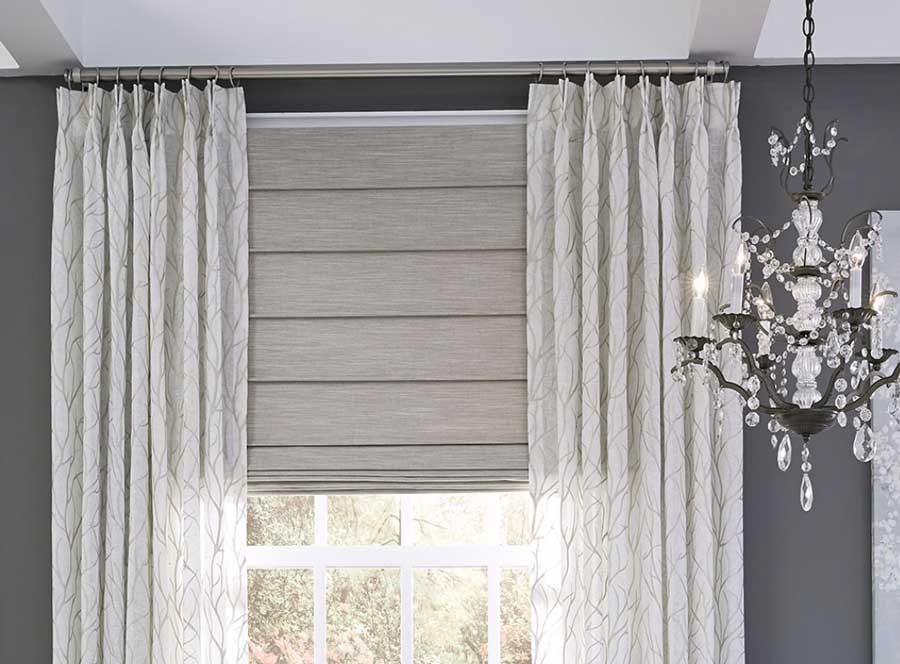
While it offers clean, contemporary lines, its effect is truly timeless. Pinch pleat drapery complements a wide range of interiors—traditional, modern, coastal, farmhouse, and everything in between. The final look goes far beyond the header alone. The number of pleats affects how formal the drapery feels, while fabric type, weight, and texture shape the overall vibe. Drapery hardware plays a key supporting role, tying the window treatments into the rest of your home’s design. Layering adds both visual interest and functional flexibility, elevating the window even more.
What is the difference between double pleats and triple pleats?
Double and triple pleats describe how many pleats appear in each section once the fabric is sewn. Double pleats are a popular favorite, forming a soft “V” shape that feels tailored but approachable. Triple pleats lean more formal, featuring three folds that fan outward to create a dramatic “W” shape—perfect for statement windows and elegant spaces.
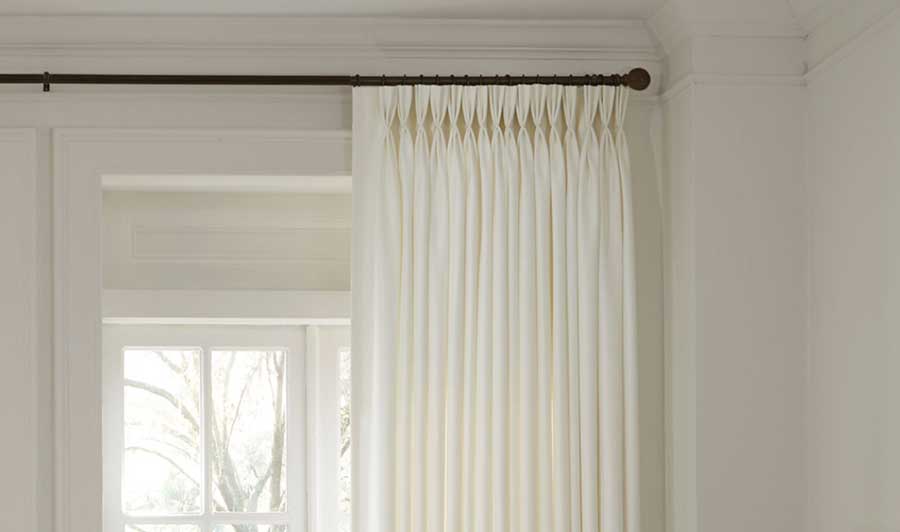
It uses more fabric than double pleats, which results in greater fullness, depth, and visual drama. Double pleats offer a slightly slimmer profile at the window, using less fabric and feeling lighter overall. Because of the additional material required, triple pinch pleat drapery can sometimes come with a higher price point, depending on fabric choice.
Is pinch pleat different from euro pleat?
Yes, pinch pleat drapery and euro pleat drapery differ in where the pleats are sewn. Pinch pleat drapery features pleats stitched a few inches below the top, while euro pleat (also called inverted pleat) drapery is sewn right at the top or about a half-inch down. With euro pleats, the gathering is visible at the header and opens as it flows downward, often creating a more relaxed, casual look, depending on fabric selection.
Which fabrics are most popular?
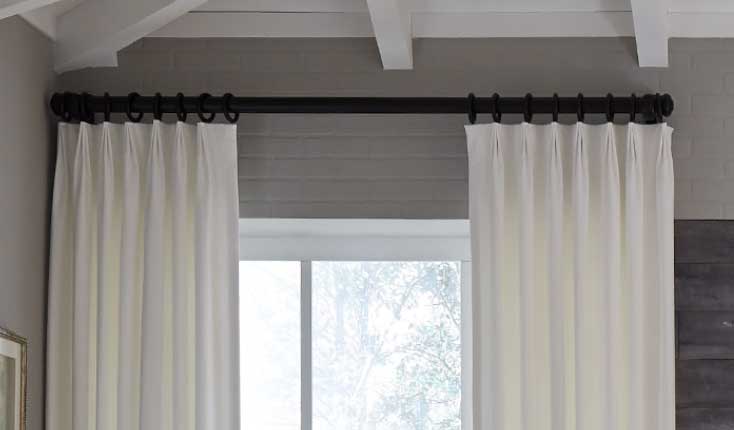
Double pinch pleat drapery pairs beautifully with medium-weight fabrics, such as cotton and linen, offering structure without feeling heavy. Triple pinch pleat drapery truly shines with rich, heavier fabrics like velvet, as well as select heavyweight linens, which enhance the fullness and drama of the pleats.
How does it compare to ripple fold or grommet?
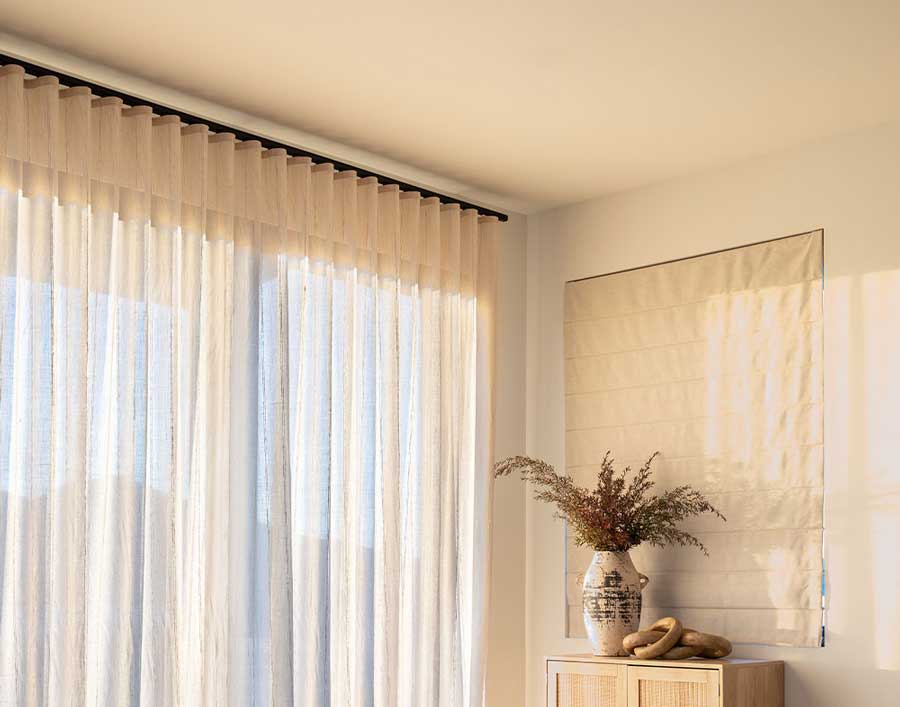
Choosing a drapery header style is a deeply personal design decision. It’s part function, part personality. While some styles are known for elegance and sophistication, they’re not the only option to consider. Many homeowners compare pleated styles with ripple fold and grommet designs when exploring custom window treatments. Ripple fold drapery travels along a specialty track, maintaining soft, uniform waves that appear to float effortlessly across the window.
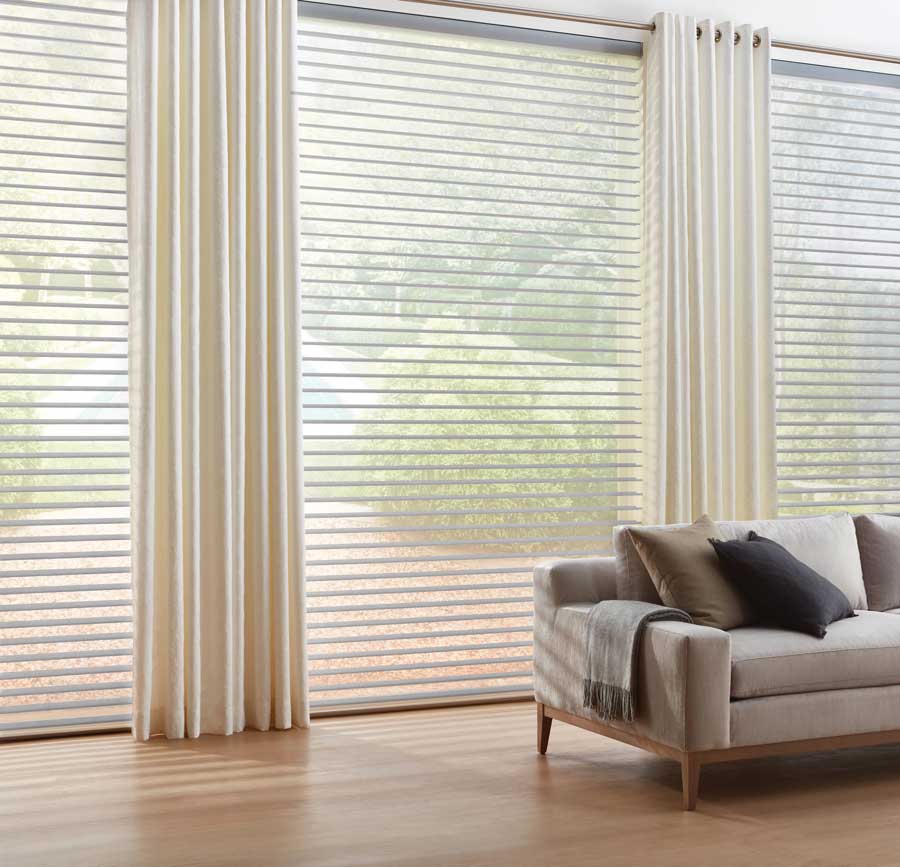
Grommet drapery features metal rings that slide directly onto the rod, creating a look that’s less structured than pleated or ripple fold styles. Depending on the fabric, grommets often feel more casual or contemporary. The exposed metal rings become a design feature, making coordination between rod and ring finishes essential.
The 9 Most Popular Pleat Styles
While double, triple, and euro pleats are the most familiar, pinch pleat drapery comes in many creative variations. These pleat styles allow you to customize drapery design down to the smallest detail, blending formality, softness, and personality.
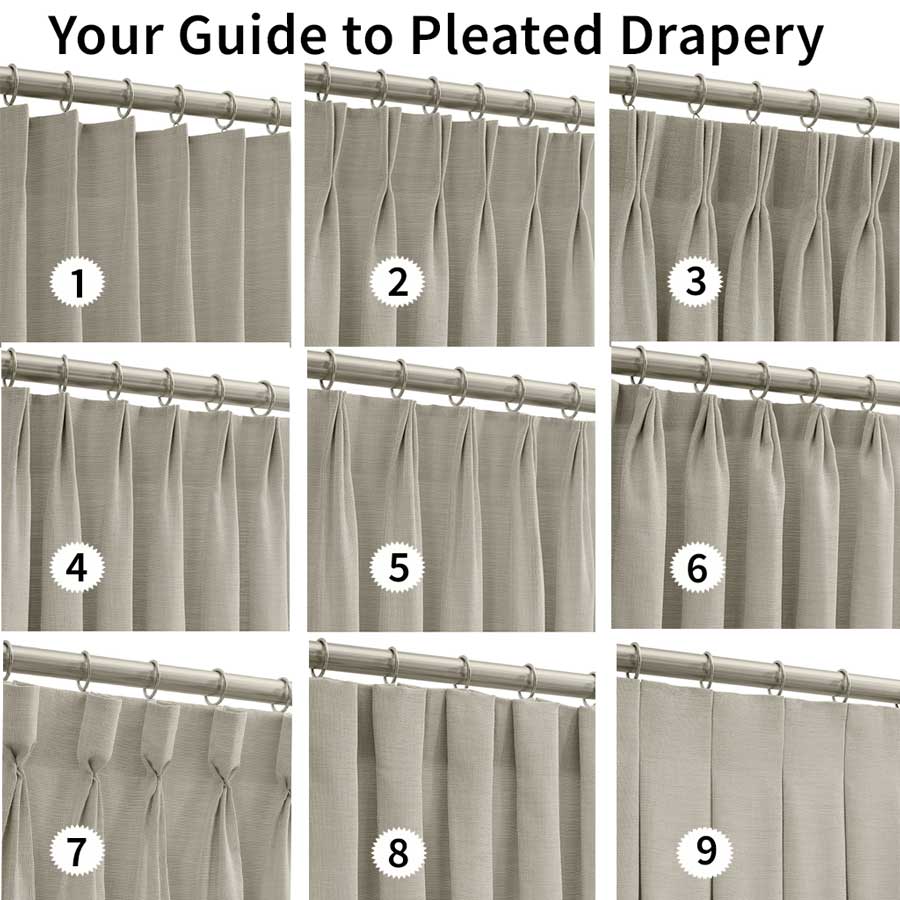
- Single Pleat: A clean, streamlined design, where fabric forms one continuous pleat from top to bottom.
- Double Pinch Pleat: Fabric is tacked 3–4 inches below the top, creating a refined “V” shape above and below the gather. Often called a two-finger pinch pleat, this is a classic staple of pinch pleat drapery.
- Triple Pleat: Pinched 3–4 inches down, it forms a bold “W” shape. Also called a French Pleat or three-finger pinch pleat, this is a signature look in formal pinch pleat drapery.
- Inverted Pleat: Fabric is pinched and sewn about a half-inch from the top, allowing pleats to fan downward. This is also referred to as the Euro Pleat style.
- Euro Pleat: This style features a double-pleat look forming an upside-down “V” that flows gracefully downward. This is also known as a double inverted pleat.
- Natural Pleat: Pleats are loosely tacked at the top, creating a relaxed drape that feels airy and casual, compared to structured pinch pleat drapery.
- Goblet Pleat: Fabric is shaped into a rounded, goblet-like form, with the base tacked to hold its structure. This formal, cup-shaped pleat is ideal for dramatic, luxurious spaces.
- Relaxed Pleat: Rounded folds are tacked at the back of the fabric, forming soft 3–4 inch loops. No pinching is visible from the front, making this a casual option also known as a box pleat.
- Tuxedo Pleat: A structured box-style pleat, tacked at the back, often used for stationary drapery panels.
Can Pinch Pleat Drapery Be Motorized?
Absolutely! It pairs beautifully with modern automation. Homeowners love the convenience of Hunter Douglas PowerView® Automation, which allows it to open and close effortlessly. Use a remote, smartphone app, or voice command to control your motorized drapes with ease.
Let’s Explore Draperies Together!
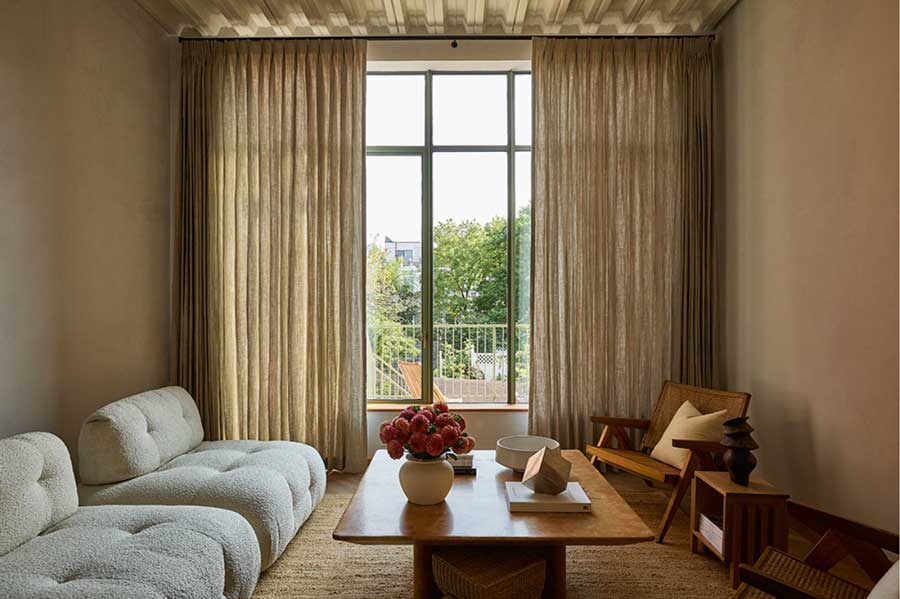
If you’re considering pinch pleat drapery for your home, we’re here to help bring your vision to life. The Aero Drapery and Blind team makes it easy to find your perfect match. Our experienced designers will guide you through fabrics, pleats, and layers to create a window treatment that’s both beautiful and functional. Stop by the showroom, then schedule your free design consultation. We can’t wait to design with you.